
Chess News
by Rosa Jefferson

Last week the high water mark was reached in Memphis chess in the truest sense of the word. Never before has such interest been aroused in the wonderful game. For months the members of the local club have waited in all eagerness for the coming of Lasker and Marshall, the chess giants, struggling as they are for the world's greatest honor in the world's greatest intellectual pastime. Tuesday of last week marked the opening of the great championship match. A large and enthusiastic audience, composed of men and women, numbering about 200 in all, assembled at the hall of the Business Men's Club, the scene of the hostilities, to gaze upon the two greatest masters of modern chess. Dr. Lasker, holding the title of championship of the world, and Frank Marshall, champion of America. Dr. Henry Posert was chosen for the introductory speech, and in a short but impressive way paid a fitting tribute to the high point of excellency that Dr. Lasker and his worthy opponent, Frank Marshall, had reached in the noble game. He also enlarged upon the fact that the two champions were in the South, "the land of the immortal Paul Morphy, who having vanquished the old world threw his shinning lance into the faces of the Titans of the old world and conquered them all." After Dr. Posert had finished, Mayor Malone extended the welcome of the city, and W.A. Bickford followed in behalf of the Business Men's Club. Mayor Malone in the course of his remarks emphasized the fact that chess should not be called a game; "Did I say game? When that is not an accurate definition of chess, which is rather an intellectual pastime than game." "Chess," continued the mayor, "has a wonderful history, dating from the earliest beginning of civilization; the pastime not only of real kings and noblemen of antiquity, but of the intellectual noblemen of the world whatever may be their station in life. Chess is not a game or a sport, and there is nothing about it to suggest the idea of gambling or anything of an unpleasant nature. I am glad to know that Memphis has one of the most brilliant chess clubs in all the Southland, and that such is its high standing under the leadership of Dr. Posert, as to attract to the city of Memphis our two distinguished guests. It is also exceedingly gratifying to have with us our fellow townsman Mr. Jefferson, the champion of all this part of the country."
Next came the address by Mr. Bickford who, in his usual clear and concise style, extended the welcome and good will of the Business Men's Club. Mr. Bickford elaborated on the fame of both principals and accentuated the fact that the contesting of the world's chess championship here placed Memphis upon a plane of importance equal to such metropolitan centers as New York and Chicago. He considered this as a distinct tribute to the character and enterprise of the Memphis Chess Club. After expressing great admiration for the noble game he said, in conclusion: "I have but one regret, if any regret at all should be cherished on such a pleasant occasion, and that is that these distinguished gentlemen might not have been entertained in our new and commodious building on Monroe avenue, which is so near completion.
It may be remarked that it is a matter of pride, which will be pardoned the directory of this club, that the interests and fortunes of the Memphis Chess Club and the Business Men's Club should have been united under this administration. However, words are idle without deeds, and as an earnest of the regard in which this department of the Business Men's Club is held, we believe that the quarters which we have provided for them in our new home may be pointed to with satisfaction.
The Business Men's Club extends its most cordial greeting, and hopes that this contest shall be marked by such interest that you will be constrained to pay us another visit in the near future."
At the conclusion of the programme the seconds were chosen. Mr. Rosenbush officiated as Dr. Lasker's second and W. R. Fearon served in like capacity for Mr. Marshall. B.B. Jefferson was chosen as referee for the entire Memphis series. Promptly at 2:30 o'clock the masters faced each other across the board, Lasker having command of the white pieces and Marshall the blacks. Dr. Lasker and his second wore red carnations and the opposing forces white carnations. Thus began the "Battle of Carnations," the opening fight of the Memphis series, and the twelfth of the world's championship. Lasker pushed his pawn to e4 and Marshall's reply, as anticipated by the onlookers, established the French defense. As the game advanced the interest became intense. The visiting devotees were crowded around boards throughout the hall, waiting anxiously for the moves as they were recorded upon a board hung on the wall.

In this photo from the March 20, 1907, edition of the Commercial Appeal,
you can see,
along with with Frank Marshall and Emanuel Lasker sitting
opposite to each other at the chessboard,
(left-right) W.A. Bickford, Mayor Malone,
W.R. Fearon, B.B Jefferson, M. Rosenbush, and Dr. Henry Posert.
 |
| D. D. Saunders |
Special attention was attracted to the board occupied by Dr. D.D. Saunders, the founder of Memphis chess and the greatest exponent of the art the South has yet known. Dr. Saunders weighed the values of the moves as they came and pointed out the replies to the satisfaction of those around him. Another important board was headed by Messrs Ames and Hill, the prominent Mississippi players. During the course of play the champions were served with strong coffee, in order to stimulate them under the great mental strain.
The first sitting was adjourned at 5:30 o'clock, leaving Lasker practically in command of the situation. When hostilities were renewed at 8 p.m., the enthusiasts were eager for the decisive blows of the great battle. Marshall held out until 10:30 o'clock, until his forty-sixth move, when he resigned the game.
If you do not see any animated chessboard below, click here and scroll back down the page to this position:
http://memphischessclub.blogspot.com/2014/04/world-chess-championship-in.html
At the conclusion of the fight a protest was registered by Mr. Marshall and his second, Mr. Fearon, with B. B. Jefferson, the referee of the match. Mr. Marshall claimed that from a warning that he was about to exceed the time limit that he was forced at a particular point to make his move. It developed later that the timers had made a mistake, and Mr. Marshall accordingly filed the following protest:
March 19, 1907
To the Referee Lasker-Marshall Championship Match:
"Dear Sir–I wish to protest the twelfth game of the match because I claim I lost it owing to the clocks which the seconds called out times telling at one time I had consumed 60 minutes in the first hour and another that I had taken 40 minutes for eight moves. This, I claim, so much confused me that I played hastily and thereby lost through having to hurry.
Sincerely,
F.J. MARSHALL"
The protest of W. R. Fearon, his second:
March 19, 1907
Mr. B.B. Jefferson, Referee:
"Dear Sir–As second for Mr. Marshall, protest is made against awarding the game now in progress, inasmuch as Mr. Marshall was at an disadvantage, resulting from the fact that the customary time-clocks which have been used for previous games were not on hand for today's game.
"We were not advised by Dr. Lasker that he did not bring these clocks from Chicago until 1:30 o'clock this afternoon and after searching the city no substitute could be found, only some stop watches used for horse races, with which watches neither of the seconds was familiar.
"The same, as you notice, show numerals for thirty minutes instead of sixty, and the divisions were for every three minutes instead of five minutes, and the figures being very small, mistakes were unfortunately made in recording the time for the various moves.
"This style of watch required that the hands be set back after each move, and did not therefore show the length of time consumed totally.
"Mr. Marshall was playing with the black pieces and on the defensive, and from the nature of the game required more time in the early part than his opponent, and in asking for his time, upon being told that he was consuming very considerably more time than he actually was, he became nervous and consequently made some moves hastily under the impression that he was being pressed for time.
"These moves were just what caused a losing position for Mr. Marshall, and therefore this protest.
Respectfully,
W.R. FEARON"
Disallowed Protest
Commercial Appeal, March 22, 1907
Upholding Dr. Lasker in his plea that the protest filed by Frank Marshall was neither formally made nor properly timed, B.B. Jefferson, referee of the twelfth game of the championship series now in progress at the Business Men's Club, has formally disallowed the protest and decided in favor of the winning player.
It appears that the protest should have been made at the time of the misunderstanding and during the course of the game; that Mr. Marshall did express his dissatisfaction over the mistake in the timekeeping, but consented to a rearrangement and continued the game under perfectly normal circumstances, which let his opponent to believe that the difficulty had been settled. After the conclusion of the game, or rather not until the evening session, was notice of a protest given, and on this irregularity the referee based his decision. Mr. Marshall may appeal to the decision of the supreme referee, Professor Isaac Rice of New York.
Second Game of Memphis Series
Commercial Appeal, March 22, 1907
Yesterday marked the opening of the second game of the Memphis series for the world's chess championship now pending between Dr. Emanuel Lasker, the present holder of the title, and Frank Marshall, the ambitious American tourney champion, who is making a bold effort to wrest the title from him.
The players were opposed in the thirteenth game of their match. R.S. Scrivener, champion of the local club, officiated as Dr. Lasker's second and Mr. Davis in like capacity for Mr. Marshall. B.B. Jefferson was referee, and M.D. McGrath vice-referee.
Probably one of the best audiences that has ever crowded around the chessic board in Memphis was on hand to witness the contest. The hall was crowded and the interest lasted from the opening moves on to the finish.
The champions were not at all disconcerted by the talking and the speculation on the moves at the different boards. They were too much enwrapped in the mysteries of the wonderful science. They sat and studied with furrowed brows.
It was noticed, however, that Marshall kept his right foot going in pendulum fashion, and Dr. Lasker "tremeloed" his left one at a rapid rate. Both smoked incessantly and had to be stimulated once or twice with strong coffee. The game began promptly at 2 o'clock, and the first half lasted until 5:30.
Blog editor's note: Much of the remainder of the article is imbedded in the illustrated game below.
At the conclusion of the fight a protest was registered by Mr. Marshall and his second, Mr. Fearon, with B. B. Jefferson, the referee of the match. Mr. Marshall claimed that from a warning that he was about to exceed the time limit that he was forced at a particular point to make his move. It developed later that the timers had made a mistake, and Mr. Marshall accordingly filed the following protest:
March 19, 1907
To the Referee Lasker-Marshall Championship Match:
"Dear Sir–I wish to protest the twelfth game of the match because I claim I lost it owing to the clocks which the seconds called out times telling at one time I had consumed 60 minutes in the first hour and another that I had taken 40 minutes for eight moves. This, I claim, so much confused me that I played hastily and thereby lost through having to hurry.
Sincerely,
F.J. MARSHALL"
The protest of W. R. Fearon, his second:
March 19, 1907
Mr. B.B. Jefferson, Referee:
"Dear Sir–As second for Mr. Marshall, protest is made against awarding the game now in progress, inasmuch as Mr. Marshall was at an disadvantage, resulting from the fact that the customary time-clocks which have been used for previous games were not on hand for today's game.
"We were not advised by Dr. Lasker that he did not bring these clocks from Chicago until 1:30 o'clock this afternoon and after searching the city no substitute could be found, only some stop watches used for horse races, with which watches neither of the seconds was familiar.
"The same, as you notice, show numerals for thirty minutes instead of sixty, and the divisions were for every three minutes instead of five minutes, and the figures being very small, mistakes were unfortunately made in recording the time for the various moves.
"This style of watch required that the hands be set back after each move, and did not therefore show the length of time consumed totally.
"Mr. Marshall was playing with the black pieces and on the defensive, and from the nature of the game required more time in the early part than his opponent, and in asking for his time, upon being told that he was consuming very considerably more time than he actually was, he became nervous and consequently made some moves hastily under the impression that he was being pressed for time.
"These moves were just what caused a losing position for Mr. Marshall, and therefore this protest.
Respectfully,
W.R. FEARON"
Disallowed Protest
Commercial Appeal, March 22, 1907
Upholding Dr. Lasker in his plea that the protest filed by Frank Marshall was neither formally made nor properly timed, B.B. Jefferson, referee of the twelfth game of the championship series now in progress at the Business Men's Club, has formally disallowed the protest and decided in favor of the winning player.
It appears that the protest should have been made at the time of the misunderstanding and during the course of the game; that Mr. Marshall did express his dissatisfaction over the mistake in the timekeeping, but consented to a rearrangement and continued the game under perfectly normal circumstances, which let his opponent to believe that the difficulty had been settled. After the conclusion of the game, or rather not until the evening session, was notice of a protest given, and on this irregularity the referee based his decision. Mr. Marshall may appeal to the decision of the supreme referee, Professor Isaac Rice of New York.
Second Game of Memphis Series
Commercial Appeal, March 22, 1907
Yesterday marked the opening of the second game of the Memphis series for the world's chess championship now pending between Dr. Emanuel Lasker, the present holder of the title, and Frank Marshall, the ambitious American tourney champion, who is making a bold effort to wrest the title from him.
The players were opposed in the thirteenth game of their match. R.S. Scrivener, champion of the local club, officiated as Dr. Lasker's second and Mr. Davis in like capacity for Mr. Marshall. B.B. Jefferson was referee, and M.D. McGrath vice-referee.
Probably one of the best audiences that has ever crowded around the chessic board in Memphis was on hand to witness the contest. The hall was crowded and the interest lasted from the opening moves on to the finish.
The champions were not at all disconcerted by the talking and the speculation on the moves at the different boards. They were too much enwrapped in the mysteries of the wonderful science. They sat and studied with furrowed brows.
It was noticed, however, that Marshall kept his right foot going in pendulum fashion, and Dr. Lasker "tremeloed" his left one at a rapid rate. Both smoked incessantly and had to be stimulated once or twice with strong coffee. The game began promptly at 2 o'clock, and the first half lasted until 5:30.
Blog editor's note: Much of the remainder of the article is imbedded in the illustrated game below.
If you do not see any animated chessboard below, click here:
Lasker Wins Final Game
Commercial Appeal, March 24, 1907
The fourteenth game of the Lasker-Marshall contest was played yesterday before a large and intensely interested gathering at the Business Men's Club, and was won handily by Champion Lasker, his opponent resigning at the twenty-first move.
This game was the crowning event of the Memphis series of the match and closed the engagement here. The two games played the first of the week attracted a large crowd of visitors, but the last game was watched by even a larger and, if possible, a more enthusiastic audience. These games have been, as before stated, intensely interesting and have been telegraphed far and wide. This week we have been treated to a part of the greatest battle of modern chess, and as such it will go down in history.
This Lasker-Marshall match is not being played for the benefit of a single person, town or city, but for the enlightenment and education of the entire chess world.
The principals are fulfilling the expectations in their accuracy and strategy in modern chess, but are they diversifying their openings enough to lend color to the match? Would De la Bourdonnais, the French master, or MacDonnell, or Anderssen, or [of] Breslau, or the great Howard Staunton have continued in such a beaten track? It is true that the masters of modern chess engaged in such a stupendous contest, where so much is involved, naturally select for the attack and defense such openings as they believe will yield for them the best results. Dr. Lasker and Mr. Marshall have stuck religiously to the queen's gambit declined and the French defense, and while Dr. Lasker in both openings has created surprise in developing his games, and has characterized the middle half with deadening force and his end game by an exactitude of calculation, thus treating the openings in a truly scientific manner and thoroughly satisfying in every respect. Still, it would not be out of order at this point to suggest that from this on the two giants will give samples of their science and strategy in other openings, purely from an educational standpoint.
Mr. Marshall says himself he does not see why he has adhered to the French defense, but that each time he expected in the next game to improve on the one previously played. Marshall is not in good form and shows it at every turn. He needs a rest and will probably take it before the match is resumed in New York city. The fifteenth game is scheduled to begin in New York on Saturday next, but it is very probable that it will be postponed til the following Saturday.
The third and last game of the Memphis series was a French Defense. Lasker had the attack and Marshall had the opportunity of giving the players a new game, but he chose to establish the French defense. It was the shortest game that has yet been played and had its strong and weak points. Lasker dealt his blows in a steady style, and at his ninth move Marshall, who had already been given an "elegant sufficiency" of having his pawns doubled on the "f" file, took the precaution, (?), to play 9. …h6. Lasker's 10. f3 was a splendid stroke. At Marshall's eleventh move, 11. …Bxh2, the players were treated to fireworks. Here the Brooklynite took his bishop and swooped down upon his opponent's pawn, making a bold sacrifice. It may well be characterized as the play of the desperate man. "I'll play for a win or lose all," and so he did lose. Lasker, of course, took the bishop and Marshall made a spirited attack with his pawns. But he did not have enough pieces into play–and there was no sweet hope. He weakened at every point from this on. At times he gave signs of a nervous flutter, straining every point to come back to life. But the champion completely overpowered him, and he resigned the game on his twenty-first move. The game lasted only two hours and a half. The score now stands: Lasker 7, Marshall 0, drawn 7.
If you do not see any animated chessboard below, click here:
Chess Mistakes
by Rosa Jefferson
Commercial Appeal, March 24, 1907
(Blog editor's note: Rosa Jefferson, the author of this article, was Chess Editor of the Commercial Appeal from 1903 – 1934. Here she has some fun poking at her brother, Bradford B. (B.B.) Jefferson, who wrote the offending report in a rival newspaper, the Memphis News-Scimitar. B.B. was virtually unbeatable in Memphis and went on to win the Western Open, forerunner of the U.S. Open, in 1913 and 1914. Of course, all the chess players in Memphis knew of both Rosa and B.B., as well as their sibling rivalry.)
While it is not the usual policy of superior chess players to take cognizance of chess mistakes that are entirely amateurish in character, still, the two paragraphs below must not go by unnoticed. The mistakes must be corrected for the enlightenment of the chess public:
The Memphis News-Scimitar, March 22:
"As was expected Mr. Marshall had the first move, and played the famous 'Queen's Gambit.' Dr. Lasker declined same."
Mr. Marshall played the 'Queen's Gambit' on the first move, did he? In doing so he accomplished the impossible in chess. No wonder "Dr. Lasker declined same."
"Jeff" blunders again:
"I think it eminently proper for me to state that the Memphis News Scimitar has taken a decided interest in the outcome of these games, and have been foremost in obtaining the details connected with it, thus manifesting considerable interest and at the same time considerable enterprise.–B.B. Jefferson, champion of the South."
The inaccuracy of this word "foremost" is too apparent to need comment. In chess vernacular the only reply is 4. …Kxf2, announces mate." (Blog editor: The text 4. … Kxf2 insinuates a King's impossible power to move, or capture, next to an opponent's King with a type of Fool's Mate on the square f2 at Black's move 4.)
Lovers of chess sent these words of commendation for The Commercial Appeal's reports:
Memphis, Tenn., March 23, 1907:
"The Commercial Appeal has thoroughly satisfied its many readers with full and interesting accounts of the Lasker-Marshall match and the promptness with which the progress of the games has been chronicled is highly commendable. The splendid annotations of the games furnished by Miss Jefferson have added greatly to the enjoyment of those players who were unfortunately unable to witness the play.–M.D. McGrath, Champion of Mississippi."
Memphis, Tenn., March 23, 1907:
"Talk to me about the Scimitar getting all the news of the great chess games between the masters Marshall and Lasker. Why, it amazes me that anyone would even give Mr. Jefferson's severe criticisms a thought. The Muzio was analyzed and commented upon by the Commercial Appeal. And its efficient correspondent classed it as a fool's gambit, notwithstanding Mr. Jefferson's extraordinary ability and judgment, and as local champion. Selah.–Sol Coleman"
Dr. Henry Posert [President of the Memphis Chess Club] has a few lines to say on the subject:
Memphis, Tenn., March 23, 1907:
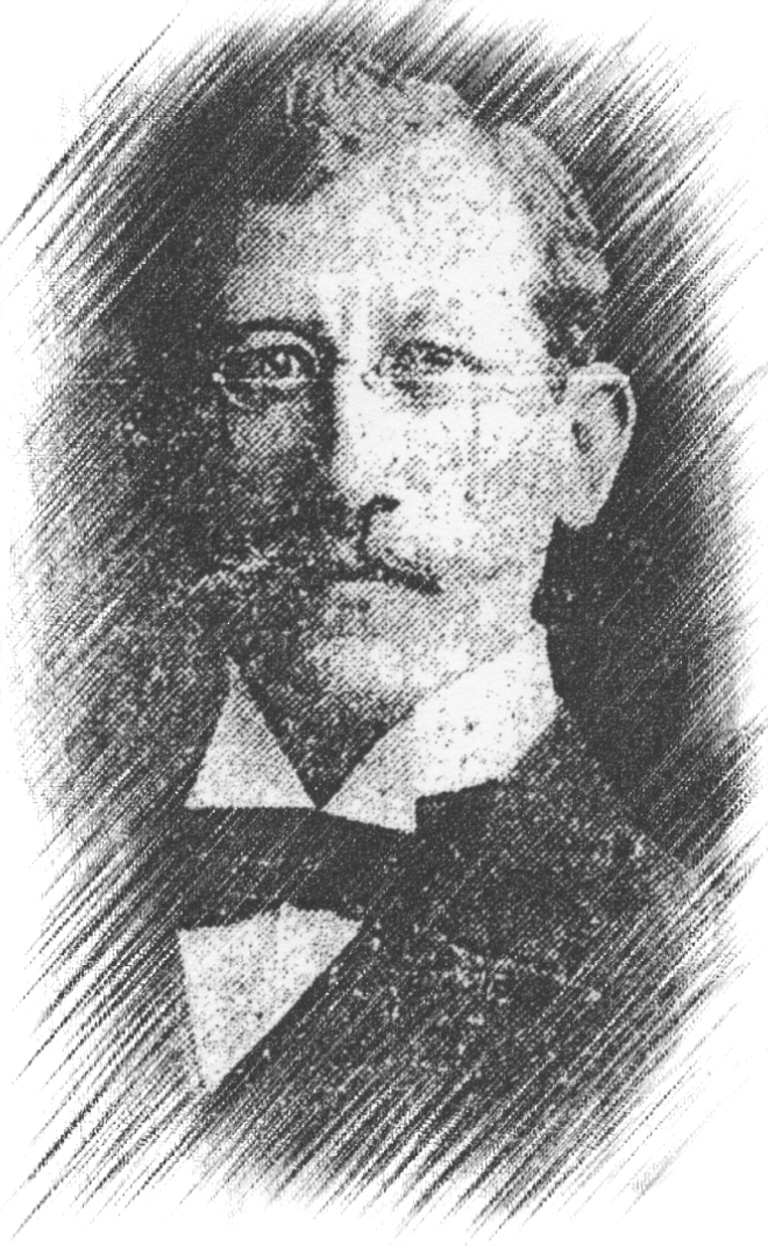 |
| Henry Posert |
Dr. Lasker was also enthusiastic in his praise of the style in which The Commercial Appeal has handled the chess news.
What Mr. Frank Marshall has to say:
"I wish to say that the chess news in The Commercial Appeal, which has been given about the match from day to day, was highly interesting, and they deserve great praise from all lovers of the noble game for the interest taken.–F.J. Marshall, Champion of America."
Mississippi Chess Players
Commercial Appeal, March 23, 1907
Among the distinguished visitors who came to Memphis to see the world's championship games were M.D. McGrath, Brookhaven, Miss.; Ed B. Hill, Cleveland Miss.; Fisher Ames and W.B. Boyd, Macon Miss. Mr. McGrath is the champion of the Mississippi Chess Association, and a worthy exponent of the art. His game is well known not only in the South but in the West and East. Mr. Hill has also an established reputation at home and abroad. He is the ex-champion of the Mississippi Chess Association, having won the matches of 1904 and 1905, but lost to Mr. McGrath last year. Mr. Ames can well be ranked in the Hill-McGrath class as his games have proven.
Mr. Boyd has the reputation of being an exceptionally strong player, but not being familiar with his game it is not easy to class him.
(Blog editor's note: These article excerpts are printed verbatim, except that the original descriptive chess notation has been replaced with algebraic notation.)
Richard Teichmann's annotations of games 12 & 13 of The World Chess Championship of 1907
If you do not see any animated chessboard below, click here:


